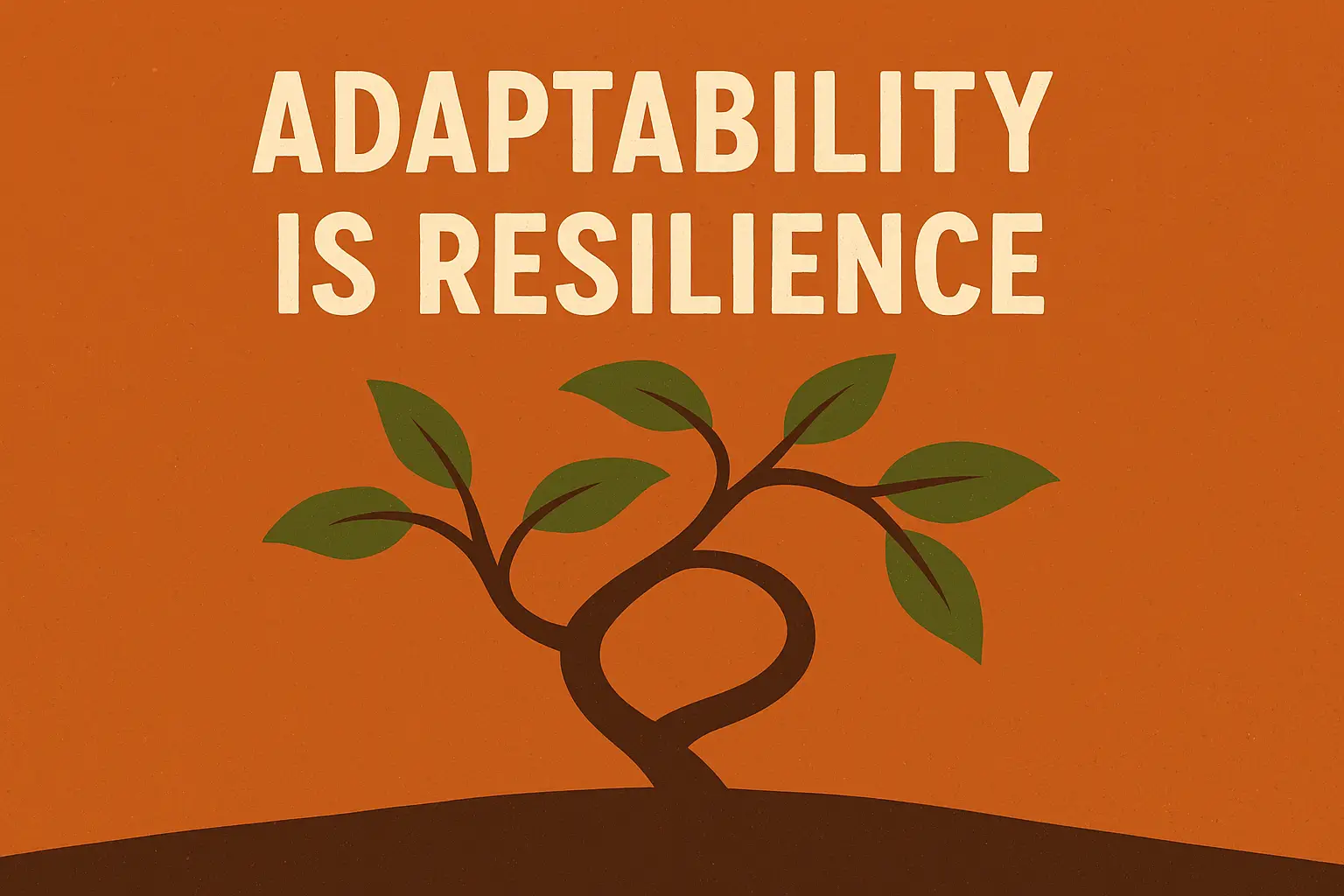
What breaks a tree in the storm is not the wind, but its refusal to bend.
Resilience is often misunderstood as toughness, grit, or powering through. But toughness alone can become brittle. When we refuse to bend, we risk breaking.
Adaptability is resilience. It is the capacity to adjust, to shift, and to grow in response to challenge. Adaptability does not mean weakness. It means flexibility with purpose. Much of how I think about adaptability and resilience comes from years of watching how people respond to change, and I share more about that on my About Page.
Adjusting Expectations
Expectations in Relationships
High expectations can be motivating, but they can also be destructive. At first, a partner may rise to meet them, but if the bar keeps moving higher, the effort becomes exhausting. Kathryn Schulz, in her book Being Wrong: Adventures in the Margin of Error, explains how our refusal to admit mistakes or adjust our view can poison intimacy. The need to always be right, or to demand more than someone can realistically give, erodes trust and connection. Over time, the weight of those expectations can lead to resentment, distance, and even divorce. You can explore her perspective further in her TED Talk on being wrong.
Expectations Turned Inward
We often hold ourselves to impossible standards and then punish ourselves when we fall short. Adaptability means softening those expectations, showing ourselves grace, and practicing gratitude for the progress we’ve made. Gratitude shifts the focus from what didn’t happen to what did, turning self‑criticism into self‑compassion.
Expectations in Leadership and Learning
Expectations can be powerful when used wisely. In the workplace and classroom, a good leader sets high expectations that help people achieve more than they thought possible. Asking a student, “Did you give your best effort?” forces them to reflect honestly. Sometimes the answer is no, and that realization pushes them to redo the work or dig deeper. A leader who challenges an employee with a difficult task, while offering scaffolding and support, creates growth instead of failure.
Expectations in the Weight Room and CrossFit
A trainer who believes in their athlete can unlock strength they didn’t know they had. Sometimes that means quietly adding extra weight to the bar, or saying, “You’re ready for this,” and then pushing for one more rep until the body truly cannot go further. In CrossFit gyms, personal records are often reached because someone else is encouraging you, doing the workout alongside you, and keeping pace. Connection transforms expectations into possibility.
Adaptability resilience means knowing when expectations are crushing and when they are catalytic. It’s the balance between softening the bar when it breaks people down and raising it when it helps them rise.
Shifting Strategies
Everyday Pivots
Adaptability also shows up when strategies fail or when mistakes open unexpected doors. Resilience means trying another approach, not giving up, and sometimes discovering something new in the process.
Accidental Inventions
Some of the world’s best discoveries came from mistakes:
- Chocolate chip cookies were born when Ruth Wakefield substituted broken chocolate pieces, expecting them to melt. Instead, they held their shape.
- Penicillin was discovered when Alexander Fleming noticed mold killing bacteria in his petri dishes.
- Microwave ovens came from Percy Spencer’s observation that radar equipment melted a candy bar in his pocket.
- Potato chips were invented when a chef sliced potatoes paper‑thin to satisfy a picky customer.
These stories remind us that adaptability resilience is not just about enduring setbacks, but about pivoting when the plan fails. Mistakes, disappointments, and failed strategies can become breakthroughs if we are willing to shift course.
In everyday life, this might mean changing how we approach a project at work, rethinking a fitness routine that isn’t delivering results, or finding new ways to connect with someone when old habits stop working. Adaptability resilience is the ability to see failure not as an ending, but as an opening.
Integrating Change
Community Recovery
My hometown of Boulder Creek went through a devastating wildfire. The flames destroyed homes and landscapes, but they also cleared space for new life that could not survive under the height of the old trees. Adaptability resilience is what allows a community to weave loss into its identity and discover growth in the aftermath.
Personal Growth Through Change
Change often feels like something stolen from us: a job lost, a plan disrupted, a relationship altered. But adaptability helps us integrate those changes into our story. Gratitude plays a role here too. It allows us to see not just what was taken, but what was given: new perspective, new strength, new opportunities.
Cultural and Psychological Angles
Cultural Wisdom
Cultures have long recognized adaptability as the essence of resilience. Bamboo bends in the wind but does not break. The Japanese proverb, “Fall seven times, stand up eight,” captures the same truth.
Research Insights
Psychological research echoes this wisdom. Carol Dweck’s work on growth mindset shows that people who see setbacks as opportunities to learn are more resilient in school, work, and relationships. You can explore her research at Stanford University. Studies on post‑traumatic growth reveal that individuals who integrate hardship into their identity often emerge with deeper meaning, stronger relationships, and greater appreciation for life.
The Resilience Framework
Awareness helps us see when change is needed.
Trust gives us courage to step into the unknown.
Connection sustains us when the path is long.
Gratitude reminds us of the value in each adjustment, turning small shifts into lasting growth.
Adaptability is what allows these pillars to work together. Without it, awareness stalls, trust falters, connection feels rigid, and gratitude loses momentum.
Closing
Adaptability is resilience. It is the thread that ties awareness, trust, connection, and gratitude together. It is what allows us to bend without breaking, to shift when strategies fail, and to integrate change into growth.
👉 Explore the full framework here: https://michaelairo.com/resilience-trauma-growth/