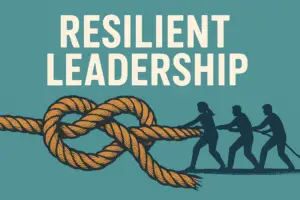
Life moves quickly. Plans shift, responsibilities stack up, and unexpected problems show up at the worst possible time. Most people are not overwhelmed because they are weak. They are overwhelmed because modern life asks them to hold more than any one person can track. This is where clarity and simplicity in daily life start to matter. They give you a way to steady yourself when everything feels heavier than it should.
The real challenge is not the complexity itself.
The challenge is the cognitive load it creates.
When everything feels urgent or interconnected, your mind tightens. You hesitate. You overthink. You burn energy on noise instead of signal. This is where resilience becomes a real advantage. It is the ability to stay steady, adaptive, and clear when the moment feels heavy.
Much of how I think about clarity and resilience comes from years of watching how people navigate change, and I share more about that on my About page.
Why clarity and simplicity in daily life matter
When you feel overwhelmed, you do not need more information. You need interpretation. You need a way to step back, zoom out, and see the pattern beneath the pressure.
Clarity reduces cognitive load.
Clarity restores momentum.
Clarity turns a tangled moment into something workable.
This is true at home, at work, and in every part of life. Business simply gives us a visible example of what is already happening internally. When you simplify what is in front of you, you move through uncertainty with more confidence.
How to simplify when you feel stressed or overwhelmed
Simplicity is not about doing less. It is about removing what does not matter so you can focus on what does. Everyone feels overwhelmed at times. What separates people is not whether they feel it but how quickly they recover and return to clarity.
When stress rises or you feel stuck, shrink the moment to something you can influence.
A few ways to do that in daily life:
- Use a physical to do list and check off each item as you complete it. Crossing something out builds momentum and signals progress.
- Break a stuck task into the smallest possible action. One tiny win is often enough to restart movement.
- Shorten the time horizon to today or the next hour so the moment feels manageable.
- Remove one obligation or expectation that is not essential.
- Ask what would make this easier instead of what would make it perfect.
- Tidy one small area of your environment. A clear physical space often creates a clearer mental space.
- Do a quick reset routine. A short walk, a glass of water, or two minutes of slow breathing can interrupt stress and help your mind settle.
- Name the real problem instead of the loud one. Often the thing causing stress is not the thing you are focusing on.
These small shifts lower the cognitive load. They create space for clarity to return. When you simplify the moment, you get unstuck faster and recover more quickly from overwhelm.
Letting go of what you cannot influence
A big part of simplifying your life is learning to release what is outside your control. Rumination and worry drain energy without creating movement. They keep your mind busy but not productive.
Letting go does not mean ignoring reality. It means recognizing the limits of your influence and choosing where to place your attention. Some people hand those things over to the universe. Others lean on faith, philosophy, or a simple belief that not everything is theirs to carry. The method does not matter as much as the intention. You create space for clarity when you stop gripping what you cannot change.
A few ways to practice this:
- Name what is in your control and what is not. Seeing it on paper often breaks the cycle of rumination.
- Set a time limit for worry. When the time is up, shift your attention to something you can influence.
- Use a grounding routine. A short walk, a slow breath, or a change of environment can interrupt looping thoughts.
- Replace the question why is this happening? with what can I do next?
- Redirect spiraling thoughts into a physical task. Clean a counter, fold something, or check off one item on your list. Physical action pulls you out of mental noise.
Letting go is an active choice to protect your energy and focus. When you stop carrying what is not yours, you recover faster and move through stress with more clarity.
What business teaches us about clarity
Business is not the main story here. It is simply a mirror. When a team is overwhelmed, they freeze. When a person is overwhelmed, the same thing happens. When a leader simplifies a problem, the team moves again. When you simplify your own moment, you move again.
The patterns are the same.
The scale is different.
Seeing this connection helps you understand that clarity is not a business skill. It is a life skill. And the more you practice it, the more resilient you become.
Turning complexity into forward motion
People who thrive are not the ones who avoid complexity. They are the ones who can slow the moment down, separate signal from noise, define the next right step, and return to clarity when life gets heavy.
This is resilience in action.
And it is a skill you can train.
If you want to explore how clarity and simplicity in daily life matter more deeply, you might like Resilience Is a Skill or The Resilience Playbook. Both expand on the idea that clarity, awareness, and adaptability are skills you can strengthen over time.