Resilience is often described as something forged in solitude. Push harder. Toughen up. Keep going. Yet every person carries a quieter truth beneath that narrative. Cultural resilience grows inside the stories, rituals, and shared practices that teach you who you are and how to move through the world. Culture becomes the blueprint your nervous system uses to decide what safety feels like. Identity grows from that blueprint.
A person does not learn resilience in a vacuum. A person learns it in kitchens, in gatherings, in the way a room feels when people who love each other sit down to eat. Readers who want to understand the work behind this perspective can visit Michael Airo’s About page.
Culture as a Nervous System Blueprint
Every culture teaches a different answer to the same questions. What do we do when life becomes difficult. Who do we turn to. What emotions are welcomed. What strength looks like. What belonging requires.
Those answers settle into the body long before a person can name them. They shape the way the breath changes under pressure, the way the shoulders rise or fall, the way the voice tightens or opens. These embodied responses form the roots of cultural resilience.
Some people grow up inside a clear cultural story. Others grow up in places where culture feels thin or scattered, like a map missing half its landmarks. Belonging becomes something you build rather than inherit. Community organizers call this the shift from Me to We. A person begins as a single thread, then slowly learns how to weave themselves into a larger cloth. A sense of belonging grows through chosen communities when inherited culture feels distant.
A person may carry several versions of We. A family We. A neighborhood We. A cultural We. A chosen We. A spiritual We. A professional We.
Identity determines which We feels real. A man may not feel that all men belong to his We. A Black American may feel a larger We because history made survival collective. A woman may feel a shared We because safety and voice have been shaped by similar pressures. A gay man may feel a We that stretches across geography and generation. A person who has been marginalized often carries a We that is both protective and ancestral.
Culture teaches you who your We is. Your nervous system organizes around that truth.
When Culture Fractures
Many families carry stories of rupture. Colonization, migration, assimilation, or displacement can fracture cultural continuity. A language disappears. A ritual fades. A story is forgotten. The body remembers the loss even when the mind cannot name it.
People who grow up between cultures often describe a feeling of being unanchored. Not fully from here. Not fully from there. The nervous system learns to scan for cues about how to belong. That scanning becomes its own form of cultural resilience. A way of reading the room. A way of surviving the in‑between.
Cultural loss does not erase resilience. Cultural loss reshapes it.
A Personal Thread: Tuesday Night Dinners
My family used to gather every Tuesday night for dinner. The table filled with pasta, bread, and dishes that felt Italian enough that I finally asked my grandmother if we were Italian. She laughed and said no, we were mostly Greek. I asked why we never ate Greek food, and she told me my grandfather had been raised in a Greek restaurant but hated Greek food. The culture was in his bones, but not on his plate.
That answer stayed with me. A person can carry a culture without displaying it. A family can inherit a story without cooking it. A lineage can live in the nervous system even when the rituals have been set aside.
After my grandfather passed, the Tuesday dinners slowly faded. No one announced the end. The rhythm simply dissolved. A gathering that once felt like a weekly heartbeat became a memory. That loss taught me something about cultural resilience. Culture is not only what we practice. Culture is also what we lose, what we long for, and what we try to rebuild.
How Culture Teaches the Body to Move Through the World
Travel has a way of revealing the rules you never knew you were following. Years ago, I spent time in China, and the first lesson arrived on the subway. Bodies pressed shoulder to shoulder. Strangers leaned into one another without apology. The train moved as a single organism, a tide of people who had learned that survival in a crowded place requires a softening of personal boundaries. The body adapts. The nervous system learns that closeness is not a threat. Closeness is simply the cost of moving together.
A different truth greeted me in Japan. Personal space felt sacred. People bowed slightly when passing. Conversations softened in public. Even the air seemed to widen around each person, as if respect itself created a small circle of quiet. The nervous system learns a different lesson there. Space is a form of care. Distance is a form of dignity.
Edward T. Hall once wrote that every culture teaches its own choreography of space. Some cultures teach the body to move like water in a crowded river. Others teach the body to widen the air around itself like a quiet prayer. Both are forms of safety. Both are forms of belonging.
Geert Hofstede added another layer, describing cultures through the lens of power distance, the invisible rules that shape who carries responsibility and how much weight a person is expected to hold. In some cultures, asking for help feels natural. In others, asking for help feels like breaking a sacred thread. The nervous system learns these rules long before the mind understands them.
Every person walks through the world surrounded by the voices of a thousand generations. Some voices whisper reminders. Some tug gently at the edges of your choices. Some pull sharply when you step too far from what once kept your people safe. These are the invisible rules of culture. They behave like threads woven through the body, tightening or loosening depending on where you stand and who is watching. A person raised in a culture of closeness learns to move through crowds like a fish in a school, guided by currents older than memory. A person raised in a culture of distance learns to widen the air around themselves, as if respect were a small circle of quiet they carry everywhere. A person raised to protect harmony learns to soften their voice. A person raised to speak truth learns to steady their gaze. None of these instincts are random. They are the choreography handed down by ancestors who survived by following these rules. The body remembers what the mind forgets. The nervous system becomes a loom where old patterns continue to weave themselves into the present.
The Language of Emotion
Every culture teaches a different emotional alphabet. Some cultures hand their children a full palette of words for longing, grief, awe, and tenderness. Others offer only a few primary colors and expect the rest to be carried quietly in the body. Emotional vocabulary becomes one of the earliest forms of cultural resilience because it determines what a person can name, what they can share, and what they must hold alone.
A culture that values emotional openness teaches the body that feelings can move. A culture that values restraint teaches the body that feelings must be contained. Neither approach is wrong. Each one evolved to protect the group in its own way. In places where survival depended on harmony, emotions that threatened the group were softened or hidden. In places where survival depended on individual assertion, emotions became signals that helped people navigate conflict, territory, or opportunity.
The nervous system learns these lessons long before language arrives. A child raised in a culture that encourages naming emotions grows into an adult who can track their internal weather with clarity. A child raised in a culture that discourages emotional expression grows into an adult who feels the storm before they can describe it. The body becomes the archive for everything that could not be spoken.
Linguists often point to Inuit languages, which contain many different words for snow. The environment teaches the language what distinctions matter. A person who lives in a landscape shaped by snow must be able to describe its texture, weight, movement, and danger. Emotion works the same way. Cultures create more words for the feelings they must navigate and fewer words for the feelings they are taught to hide. A person raised with a rich emotional vocabulary learns to read their inner weather with precision. A person raised with only a few emotional words learns to feel the storm before they can describe it.
Cultures also differ in how they interpret the same emotion. Anger may be a boundary in one place and a rupture in another. Sadness may be an invitation in one place and a private burden in another. Joy may be something to share loudly or something to protect quietly from envy or misfortune. These emotional rules shape how people read one another. A direct expression of frustration may feel honest in one culture and disrespectful in another. A quiet withdrawal may feel polite in one place and confusing in another. A tear may feel like an opening or an embarrassment depending on the emotional grammar a person inherited.
Emotional vocabulary becomes a map for belonging. What a person can name, they can regulate. What a person can share, they can integrate. What a person cannot name or share becomes a weight the body must carry. Emotional language is not simply communication. Emotional language is a form of survival. It is one of the most powerful engines of cultural resilience because it shapes how people recover, reconnect, and return to themselves.
Immigrant Resilience and the Search for Belonging
Immigrants often carry a unique form of resilience. Many arrive in places where their language, customs, and identity feel out of place. A sense of belonging becomes something to rebuild from the ground up. That search for belonging often produces extraordinary drive.
Malcolm Gladwell describes this phenomenon in Outliers, writing that “Cultural legacies are powerful forces. They have deep roots and long lives. They persist, generation after generation, virtually intact.” Immigrant families often carry those legacies like a compass. Even when the landscape changes, the direction remains.
Many immigrants become the hardest workers in their communities. Not because they are trying to prove something, but because survival depends on adaptation. Family becomes the anchor. Culture becomes the rock. The shared We becomes the lifeline that keeps the nervous system steady in unfamiliar terrain.
Readers interested in how identity shapes resilience can explore my Resilience Flagship Article, which expands on these themes.
Success grows from that foundation. Not from grit alone, but from the deep need to create a place where the next generation will feel at home.
Culture, Identity, and Your Internal Pattern
Identity research shows that people with a strong sense of who they are and where they belong recover more quickly from stress. Culture shapes that identity. Culture answers questions like:
- Who are my people.
- What do we do when things go wrong.
- What emotions are allowed.
- What strength looks like.
- What weakness looks like.
A person raised in a culture where speaking up was punished may learn to fade. A person raised where only loudness got attention may learn to surge. A person raised where scanning for danger kept them safe may learn to track every detail.
These patterns are not random. These patterns are cultural adaptations. The nervous system stays loyal to the rules that once kept connection intact.
The Universal Pillars Beneath Cultural Difference
Even with all this variation, the same three pillars appear across cultures.
- Awareness. Noticing what is happening inside and around you.
- Trust. Believing you and your people can move through the moment.
- Connection. Knowing you do not have to do it alone.
These pillars form the foundation of cultural resilience.
Questions to Reflect On
- What stories shaped your understanding of strength.
- What practices helped your people stay steady.
- Where did your culture give you permission to move, sing, feel, or ask for help.
- Where did it teach you to stay small, quiet, or alone.
These questions reveal the cultural blueprint beneath your resilience. They show you why your body responds the way it does and where there may be room to gently update the pattern.
Cultural Resilience
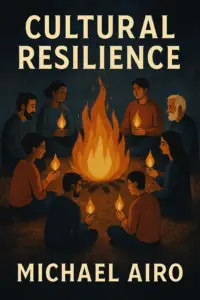
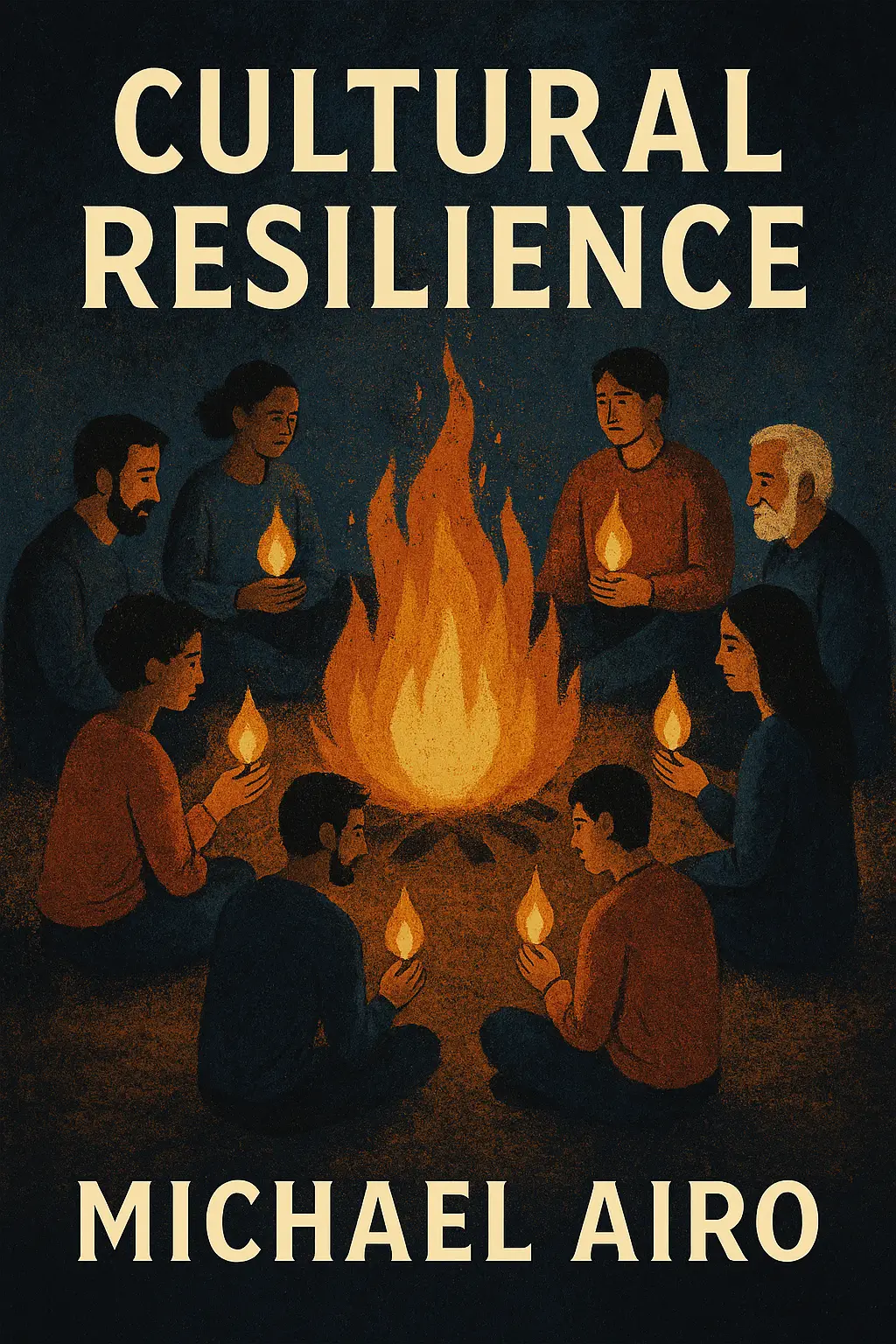
A person’s resilience is not only the story they live. A person’s resilience is the story they come from. Every culture hands down a rhythm, a recipe, a flame, a way of gathering around what matters. Every person carries that inheritance in the body, even when the rituals fade. The work of adulthood becomes learning how to honor the threads that shaped you and how to weave new ones when the old ones fall away.