When the Old Identity Stops Fitting
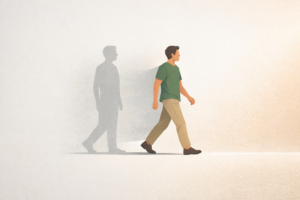
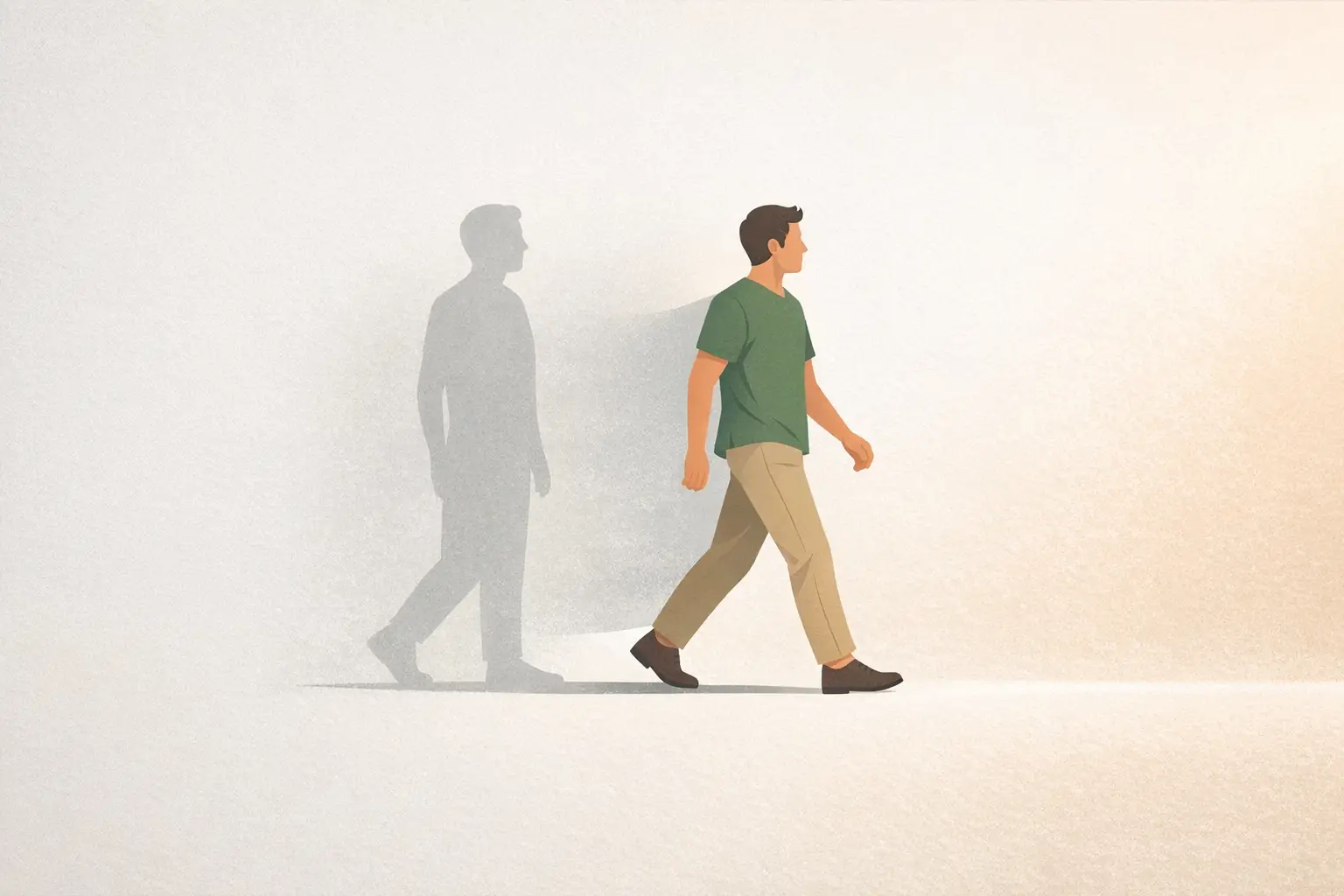
A moment arrives when the life you have been living no longer sits comfortably on your shoulders. You walk into a familiar room, say the familiar line, play the familiar role, and something inside you pulls back. The air feels different. The rhythm feels off. The version of you that once moved through this space with ease now feels slightly misaligned, like your body knows a truth your mind has not caught up to yet.
You feel the shift in small ways first. A tightening in the chest. A flicker of irritation where there used to be excitement. A heaviness in a conversation that once felt effortless. You laugh at a joke you would have made yourself a year ago and notice the hollowness of it. You hear your own voice and think, quietly, “I don’t fit here anymore.”
This is the earliest sign of outgrowing yourself.
Not because you did anything wrong.
Because you have changed.
The ego tries to keep you anchored to what it knows. Other people try to keep you anchored to who you have been. You stand between those two forces, sensing a shift you cannot yet articulate. The old identity still fits well enough to wear in public, but you can feel the seams pulling. You can feel the fabric thinning. You can feel the quiet truth rising: the person you have been is no longer the person you are becoming.
The beginning of growth rarely feels like expansion. The beginning feels like friction. A subtle, persistent awareness that the life you built from your old self cannot stretch far enough to hold the new one forming underneath. This is where the story of becoming begins.
To learn more about my work and background, visit Michael Airo’s About Page.
How You Know an Identity Has Reached Its End
An identity rarely ends with a dramatic moment. The ending shows up in small, almost forgettable ways. The body tells the truth before the mind catches up.
You notice it in the pauses. You hear it in your own voice when you slip into an old role and feel the discomfort rise. You walk away from a conversation and think, “That isn’t me anymore.” Irritation replaces excitement. Heaviness replaces pride. A strange hollowness replaces belonging.
An identity ends quietly. Not with a declaration, but with a mismatch. These are the earliest signals of outgrowing yourself.
Why the Ego Clings to Old Roles
Ego is not the enemy. The ego behaves like a librarian of your old selves, carefully cataloging every role that once kept you safe, every strategy that earned approval, every posture that made you feel powerful, every pattern that helped you belong. Nothing gets discarded. Anything that worked in the past is filed away and preserved, tucked onto the shelves like life vests for a drowning self. Familiar identities feel safer than unfamiliar growth, even when they no longer fit.
So the ego clings:
- to the version of you that needed competition to feel worthy
- to the version that belittled others to feel bigger
- to the version that justified behavior you’ve already outgrown
- to the version that played the bratty little brother because it kept you included
- to the version that stayed loud or sharp or defensive because softness felt dangerous
None of these identities were flaws or chinks in your armor. They were emotional tools that helped you survive the rooms you were in. Survival strategies don’t always translate into growth strategies. For a deeper look at why positive change can still hurt, read the next article in the series:
Good Transitions Hurt.
When You No Longer Want to Be Who You Were
A turning point arrives quietly. You catch yourself mid‑reaction and feel a pull toward something steadier. The old performance feels heavier than it used to. A different way of being calls your attention, not with force, but with a kind of inner honesty you can no longer ignore.
The shift shows up internally in moments like these:
- A familiar reaction rises and you feel resistance instead of momentum.
- A joke leaves your mouth and you hear the edge in it.
- A conversation you would have dominated now feels draining.
- A victory that once fed you lands with a thud.
- A mask you’ve worn for years suddenly feels too tight to breathe in.
The cost of staying the same becomes impossible to ignore.
A new version of you begins forming in these moments.
The shift starts in the body long before the mind can explain it.
Something in you wants to move differently, speak differently, choose differently. Something in you wants to grow.
This is the real beginning of outgrowing yourself.
The Scenarios That Reveal the Shift
Certain external moments expose the truth with surprising clarity.
- You hear yourself make a joke that used to land but now feels mean.
- You win an argument and feel empty instead of triumphant.
- You slip into the bratty sibling role around family and feel yourself shrink.
- You justify something you no longer believe in and feel the hollowness of it.
- You receive praise for a trait you’re trying to outgrow and feel a quiet ache.
These moments are not failures. They are signals. They show you where the old identity is still holding on.
When Others Keep Seeing the Old You
The hardest part of changing is not the internal shift. The hardest part is the external one. People often prefer the version of you that made sense to them. They respond to the familiar tone, the familiar jokes, the familiar role you used to play. You can feel yourself pulled back into patterns you have already outgrown.
This tension does not mean you are doing something wrong. Instead, this tension means you are crossing a threshold. The new identity needs time to become visible. The old one needs time to fade.
Every Emotion Has a Job
Dr. Marc Brackett teaches that every emotion has a purpose. Anger protects. Sadness releases. Fear alerts. Joy expands. Even overwhelm has a job. Overwhelm forces you to stop carrying what you were never meant to hold alone.
More on his work here:
Home – Marc Brackett.
Identities work the same way. Every version of you had a job.
- The people pleaser kept you connected.
- The perfectionist kept you safe from criticism.
- The overachiever helped you feel worthy.
- The caretaker made you indispensable.
- The quiet one kept you out of conflict.
- The strong one kept you from falling apart.
These identities were not mistakes. They were strategies. They were the best you could do with what you had. And now you are outgrowing yourself.
That is why it hurts.
Why the Mind Panics During Growth
When you outgrow a part of yourself, the mind interprets the shift as danger. Familiarity feels safer than happiness. Predictability feels safer than expansion. The mind clings to what it knows, even when what it knows is limiting you.
This is why identity shifts often come with fear spikes, intrusive thoughts, or the urge to run back to what you have outgrown. These reactions are not signs of failure but are signs that your system is recalibrating.
Sometimes the shift brings up thoughts that feel frightening or out of character. These thoughts deserve care and attention, not shame or silence. They often signal that a part of you is trying to end a role that no longer fits, a role that has been stretched past its lifespan. When these signals go unacknowledged for too long, they can grow sharper and more alarming, especially if you keep gripping an identity that has already finished its job.
Overwhelming or unsafe thoughts are a sign that something in you is asking to be witnessed. Speaking with a mental health professional or someone you trust can help you sort through what’s ending and what’s trying to begin. You do not have to navigate that alone.
You are not trying to end your life. You are trying to end a version of yourself that can no longer carry you forward. The danger comes from pretending nothing is changing, from holding on to an identity that has already let go of you.
The First Signs of the New Self Emerging
A new identity rarely arrives fully formed. The early signals are small.
You pause before reacting.
You choose silence instead of defensiveness.
You feel a flicker of pride when you set a boundary.
You notice you do not need to win the conversation to feel grounded.
You soften in places that used to be armored.
These moments are easy to overlook, yet they are the early architecture of the person you are becoming.
How to Live in the In-Between
The space between identities is uncomfortable. You are no longer who you were, but not yet who you are becoming. Gentleness matters most here.
Slow your reactions.
Choose differently, even if it feels awkward.
Give people time to adjust.
Let the new identity grow roots before expecting it to carry weight.
Allow the old identity to fade without forcing it.
The in-between is not a failure. The in-between is the bridge.
You Are Allowed to Outgrow the Person Others Still Think You Are
This is the heart of becoming.
You are allowed to outgrow the identity that once protected you.
You are allowed to outgrow the version of you that others still expect.
You are allowed to outgrow the roles you played to belong.
You are allowed to outgrow the patterns that once made sense.
You are allowed to outgrow the story you have been telling about yourself.
You are allowed to become someone who fits you better.
The discomfort you feel is not a warning; rather, it is the sound of an old identity loosening its grip.
This is the real beginning of outgrowing yourself.