Some life changes arrive quietly, the way morning light slips into a room before you are fully awake. A new baby. A marriage. A long‑awaited promotion. A retirement that reshapes the rhythm of your days. These moments are described as blessings, milestones that should lift the heart.
A different current often moves beneath the surface. Joy rises, but another feeling moves with it, like a shift in the wind before a storm. Warm air and cool air meet in the same sky, and the pressure becomes something you can feel but cannot easily name.
Positive transitions often create emotional conflict because every new identity requires letting go of an old one. Many people feel unprepared for the emotional weather that follows them into the new chapter.
Understanding Positive‑Transition Depression
Positive‑transition depression refers to the emotional heaviness that appears during life changes that are supposed to be joyful. The experience often includes:
- sadness or grief during a happy event
- fear or uncertainty during a milestone others celebrate
- a sense of loss during a moment framed as gain
This emotional conflict is far more common than people realize. Research on postpartum depression, for example, shows how love and despair can coexist in the same room.
Other examples appear everywhere:
- Cold feet before a wedding often appear beside genuine commitment.
- Loss of purpose after retirement often appears beside long‑awaited freedom.
These reactions are not rare. These reactions are not failures. These reactions are part of being human in moments that reshape identity.
A deeper truth sits beneath all of this: every major life change we survived as children required letting go of a former version of ourselves. A child who never learned to release old identities would still sleep with a baby blanket, carry a teddy bear everywhere, use a pacifier for comfort, and rely on others to meet every need. Growth has always required surrender. Adulthood simply raises the stakes.
A Personal Moment When the Sky Split
A major relationship in my own life once ended at the same time a new opportunity opened. Friends and family described the moment as a fresh start, a chance to rebuild, a doorway into something better. Their voices carried warmth. Their excitement felt genuine. Their certainty that I should be happy was unwavering.
My inner landscape told a different story. A heaviness settled in my chest, subtle but persistent. The shift felt like standing in a field where the sky looked calm, yet the wind kept changing direction. Something in me sensed a storm forming, even if no one else could see it.
The experience taught me how disorienting it can be when the world insists on celebration while your heart is still adjusting. The moment also revealed how quickly emotional conflict can turn into silence when you feel you are not allowed to speak the truth. More about my background and the work that shaped my understanding of resilience can be found on Michael Airo’s About Page.
Why Positive Change Can Still Feel Like a Storm
Every major transition requires letting go. A new beginning often requires the end of something familiar, the way a storm reshapes the landscape before the air settles again.
- Becoming a parent reshapes identity and erases old freedoms.
- Getting married shifts the sense of self that once stood alone.
- Starting a new job disrupts rhythms that once felt steady.
- Retiring removes a structure that once held purpose.
The world celebrates the gain. The body feels the loss. Both experiences deserve space.
Unspoken grief behaves like a tightening wind. The rotation begins slowly, almost invisibly. A small ache. A quiet fear. A sense of disorientation. Over time, the swirl grows stronger, pulling more emotion into its center.
How to Recognize This in Yourself
Many people miss the early signs because they expect only joy. Emotional conflict during positive change often shows up as:
- a sense of heaviness during a moment others call exciting
- irritability or withdrawal during celebrations
- guilt for not feeling the “right” emotion
- fear of admitting mixed feelings
- a quiet longing for the life you just left
- a sense of drifting or disorientation
- a pressure to perform happiness
These signs do not mean something is wrong with you. They mean the transition is bigger than the story others are telling about it.
The Stone That Pulls You Under
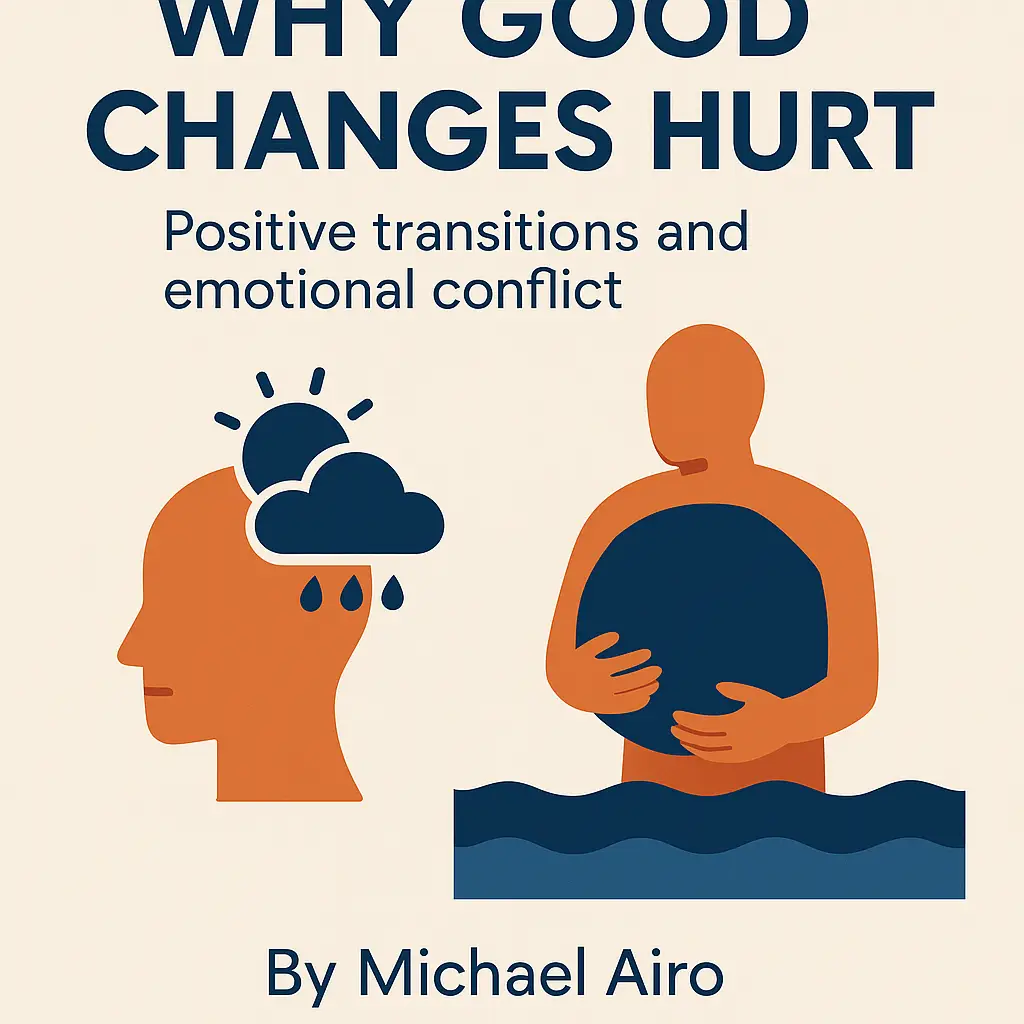
A hidden weight often forms during these transitions. The weight behaves like a stone in a pocket during deep water. The person keeps sinking, not because they want to drown, but because letting go of the stone feels impossible.
The stone represents the old identity. The old routines. The old version of life that felt familiar. Releasing that weight feels like betrayal. Holding it feels like loyalty. The conflict becomes a quiet struggle beneath the surface.
Many people reach the bottom before they realize the truth: rising requires release. The surface waits above, but the climb begins only when the hand opens.
Letting go asks for courage. Letting go asks for honesty. Letting go asks for trust in a future that has not yet taken shape. Yet release is often the moment the body finally rises toward air. For more on the emotional masks we wear during transitions, you can explore my earlier piece on Emotional Integrity.
The Danger of Pretending the Sky Is Clear
Performing happiness becomes a survival strategy when the environment allows only one emotional note. Smiles become a mask. Polite answers become a script. The truth becomes something carried in private, like that stone held tight underwater.
Pretending has a cost.
- Emotional honesty fades.
- Isolation grows.
- Depression begins to take shape in the silence.
Depression often grows in the gap between what a person feels and what they believe they are allowed to feel. That gap widens when the world insists on celebration while the heart is still adjusting.
Honesty becomes the first shelter from the storm.
Honesty as the Calm at the Center
Naming the full emotional landscape creates room to breathe. A person can love their child and still mourn the life they had before. A person can feel grateful for a marriage and still miss the independence they once knew. A person can celebrate a promotion and still fear the weight of new expectations. A person can welcome retirement and still feel unmoored without the structure that shaped their days.
Resilience grows from the ability to hold both truths without shame. Acknowledgment softens the pressure. Transparency reconnects a person to themselves. Emotional clarity becomes the calm center of the storm, the quiet eye where a person can finally hear their own voice again.
Honesty does not erase the darkness, but honesty keeps the darkness from swallowing the light.
Support That Steadies the Winds
Coping skills matter during positive transitions just as much as during painful ones. Emotional complexity needs outlets that can hold the full truth.
Helpful supports include:
- a friend or family member who can listen without judgment
- a therapist who can help name and organize the emotional experience
- a journal or creative practice that gives feelings a place to land
- routines that anchor the body when everything else feels new
- rest that allows the nervous system to settle
Support does not remove the storm. Support keeps a person grounded while the winds shift.
Moving Forward After the Air Clears
Positive change can still carry shadows. Joy can still coexist with grief. Growth can still feel like loss. These truths do not make a person ungrateful. These truths make a person human.
Resilience grows when a person allows the full emotional truth to exist. Compassion grows when they stop punishing themselves for feeling more than one thing. Healing grows when they share the truth with someone who can hold it.
A new chapter often asks for a new version of the self. Honesty becomes the bridge between who you were and who you are becoming, the way calm air returns after a storm and the landscape begins to rebuild.
Positive changes often require letting go of a former identity. The emotional conflict between gain and loss creates pressure that can feel like sadness, fear, or grief.
Many people experience mixed emotions during major transitions. Postpartum depression, cold feet before a wedding, and loss of purpose after retirement are common examples.
Coping often begins with honesty. Naming the full emotional landscape, seeking support, and allowing space for both joy and grief can help the mind stay steady.
Conflicted feelings often reflect the size of the transition, not the quality of the decision. Identity shifts naturally create emotional turbulence.