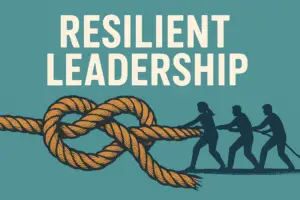
In both business and life, challenges aren’t a matter of if but when. That’s why resilience matters: it decides whether you bend or break under pressure. And resilience isn’t some fixed trait you’re born with. It’s a discipline, a skill set you can train, strengthen, and scale.
The Resilience Playbook pulls from two arenas I know well: business and fitness. It shows how adaptability, recovery, and deliberate practice turn setbacks into fuel. Much of how I think about resilience comes from years of watching how people navigate change, and I share more about that on my About Page. Resilience is the bridge between disruption and growth, the difference between leaders who stall out and those who come back sharper.
Principle 1: Progressive Overload
In fitness, muscles only grow when they’re pushed just beyond their current limit. Business works the same way.
- Fitness parallel: You don’t start with the heaviest weight. You add resistance gradually, forcing your body to adapt.
- Business application: Take on projects that stretch your skills without snapping them. Each stretch builds your tolerance for uncertainty and complexity.
The entrepreneur who only takes “safe” projects never develops the capacity to handle volatility. The one who deliberately accepts slightly bigger challenges each quarter builds the muscle to absorb shocks and seize opportunities.
Angela Duckworth, in Grit, calls this “sustained passion and perseverance.” Bob Parsons put it even more bluntly: “Never stop investing. Never stop improving. Never stop doing something new. Make it your goal to be better each and every day, in some small way.”
That’s progressive overload in action: never stop growing, never stop stretching.
Principle 2: Recovery Cycles
Athletes know growth doesn’t happen during the workout, it happens during recovery. Business leaders forget this all the time.
- Fitness parallel: Push too hard without rest and you hit overtraining. Strength stalls, energy crashes, sleep quality drops, and even immunity takes a hit. Every health metric declines when recovery is ignored. The body isn’t weak in those moments, it’s signaling that adaptation requires rest.
- Business application: The same is true in leadership. Endless hustle without recovery doesn’t build resilience, it erodes it. Teams that never pause see creativity, focus, and morale decline. Leaders who schedule downtime, reflection, and renewal treat rest as a strategic investment rather than a luxury.
A founder grinding ninety hour weeks might look tough in the short term, but burnout is inevitable. The leader who builds recovery into their rhythm sustains performance for the long game.
Viktor Frankl, in Man’s Search for Meaning, reminds us resilience isn’t just enduring suffering, it’s finding meaning in it. Recovery is where you reconnect with that meaning and where the real growth takes placen’t just enduring suffering, it’s finding meaning in it. Recovery is where you reconnect with that meaning.
Principle 3: Feedback Loops
In training, progress isn’t just about the weight on the bar. It’s about the signals you track along the way: the before and after photos, the body composition scans, even the way your energy and focus feel day to day. Those checkpoints tell you whether the work is paying off or if you need to adjust.
Business is no different. Without feedback, you’re flying blind.
- Fitness parallel: Athletes track more than numbers. They measure body fat percentage, log performance, and notice how their body and mind respond. The data plus the lived experience creates a full picture of progress.
- Business application: Leaders need the same mix of metrics and “feel.” Revenue dashboards and customer surveys matter, but so does the pulse of the team: morale, creativity, and energy. Both the hard data and the human signals are feedback loops that guide smarter decisions.
A team that waits until quarterly reviews to assess performance often misses the early warning signs. A team that builds weekly feedback loops, quick check ins, customer touchpoints, and lightweight metrics, can pivot before small issues become crises.
Nassim Taleb’s Antifragile argues that systems grow stronger when exposed to stress and feedback. The key isn’t avoiding shocks, it’s using them as information. Just like an athlete adapts training based on how their body responds, resilient businesses adapt based on what their systems and people are telling them.
Principle 4: Adaptability as Strength
Resilience isn’t about being unbreakable. It’s about being flexible enough to bend, then snap back stronger.
- Fitness parallel: Doing the same exercise over and over eventually leads to a plateau. You get what you train for. A person who only trains the bench press will get stronger at pressing weight off their chest, but that doesn’t mean they’ll be strong enough to cling to a ledge and hold their bodyweight. Different challenges demand different adaptations.
- Business application: Companies that only “train” one way of operating eventually stall out. A team that only optimizes for efficiency may plateau when the market shifts. A leader who only develops one style of decision making may find themselves unprepared when conditions change.
During a downturn, one company clings to its old model and collapses. Another adapts its offerings, shifts its messaging, and emerges stronger. The difference isn’t resources, its adaptability, the willingness to train for the challenges you actually face, not just the ones you’re comfortable with.
Bruce Lee said it best: “Be like water, my friend.” Resilience isn’t resisting change. It’s flowing with it and training yourself to meet whatever shape the challenge takes.
Why Resilience Matters in Practice
Resilience isn’t about never falling. It’s about how quickly and effectively you rise.
- The entrepreneur who reframes failure as feedback.
- The student who uses a poor grade as fuel to improve.
- The athlete who recovers, adapts, and comes back stronger.
In every case, resilience isn’t innate. It’s practiced, trained, and reinforced by belief and expectation. That’s the essence of The Resilience Playbook: resilience is built through deliberate practice, not chance.
The Resilience Playbook
- Build recovery habits: Sleep, reflection, and rest are multipliers.
- Create feedback loops: Track progress and adjust in real time.
- Practice adaptability: Treat change as training, not threat.
- Invest in relationships: Resilience grows stronger in community.
- Reframe Setbacks: Treat them as feedback, not verdicts and not self-worth.
Bringing It All Together
Resilience is a discipline, not a one-time achievement. By applying the same principles that build physical strength, progressive overload, recovery, feedback, and adaptability, you can build a business and a mindset that doesn’t just survive challenges but thrives because of them.
This is why The Resilience Playbook matters: resilience isn’t innate, it’s cultivated. And like any skill, it grows stronger the more you practice.
If this resonates with you, explore more in the Insights section, or read Why Strategy Fails Without Mindset to see how resilience and mindset interlock. Resilience is a Skill where I break down how to train it deliberately in everyday life.